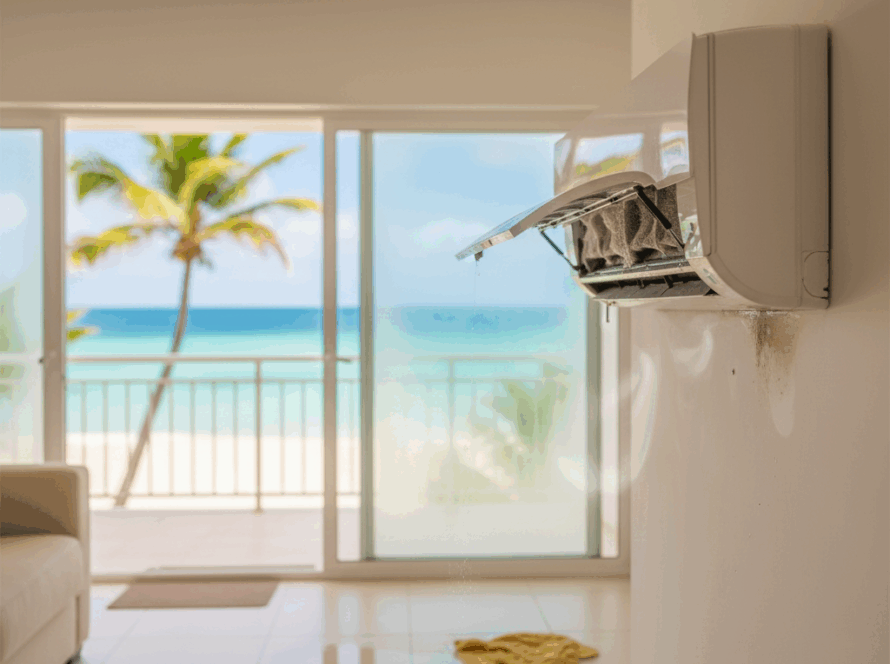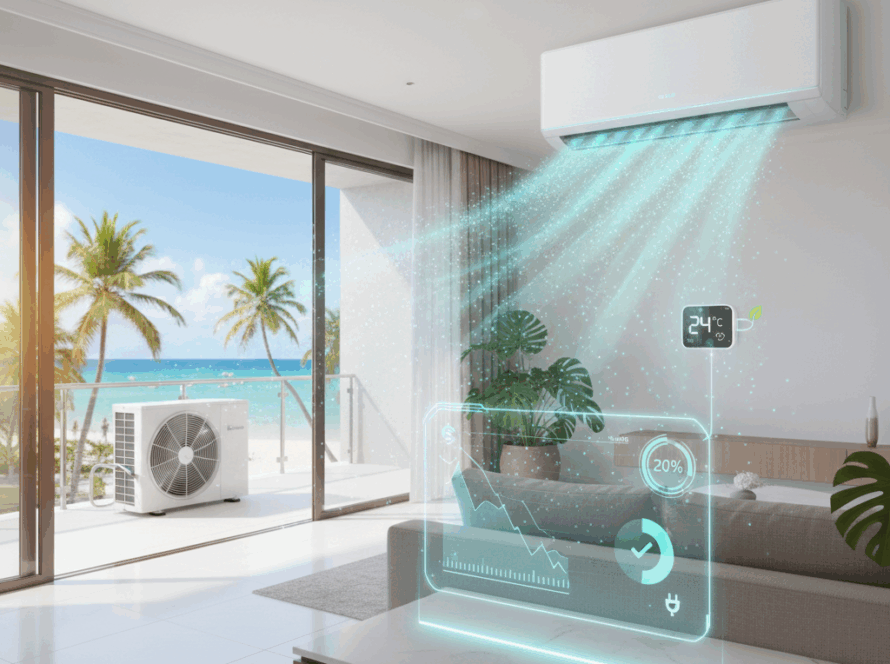


Finding the Right Cooling System for Barbados’ Climate
Choosing the right air conditioner for your home or business in Barbados isn’t just about comfort — it’s about efficiency, cost, and long-term performance. One of the most common questions we get at TwentyOne Degrees is:
“Should I buy an inverter or a non-inverter AC unit?”
Let’s break down the key differences so you can make the best decision for your cooling needs.
1. How the Two Systems Work
Non-Inverter ACs
- Operate at a fixed speed — when the room reaches your desired temperature, they turn off.
- When it warms up again, they restart at full power.
- This constant on-off cycling uses more electricity and causes temperature fluctuations.
Inverter ACs
- Use variable speed compressors, meaning they can adjust cooling output as needed.
- Instead of switching off completely, they maintain a steady temperature while running efficiently at lower power.
👉 The result: smoother, quieter, and more energy-efficient cooling.
2. Energy Efficiency & Cost Savings
Barbados’ tropical weather means your AC runs most of the year — and that’s where inverter systems shine.
- Inverter ACs can save 30–50% in energy costs compared to non-inverters.
- Non-Inverter ACs consume more electricity because of frequent restarts and power surges.
Although inverter units are slightly more expensive upfront, they pay for themselves within a year or two through reduced electricity bills.
3. Comfort and Consistency
Inverter AC: Keeps the room temperature stable and comfortable, avoiding hot or cold spikes.
Non-Inverter AC: Temperature often fluctuates — cool for a while, then slightly warm until it restarts.
For a humid island like Barbados, where consistent cooling is key, inverter units provide steady comfort all day and night.
4. Noise and Performance
Inverter units operate much quieter since they don’t constantly power on and off.
They’re perfect for bedrooms, offices, and small apartments where peace and quiet matter.
Non-inverter ACs, by contrast, produce noticeable sound each time the compressor restarts — something many Barbadian homeowners find distracting.
5. Maintenance and Longevity
Because inverter compressors run at variable speeds and don’t experience abrupt stops, they endure less wear and tear.
This means:
- Fewer mechanical issues
- Longer equipment lifespan
- Lower maintenance costs over time
However, both types need regular servicing to ensure optimal performance — especially in Barbados’ salty air and humid conditions.
6. Upfront Cost vs. Long-Term Value
While non-inverter ACs cost less to buy, they can cost more to operate.
Inverter units, though more expensive initially, are an investment in long-term comfort, reliability, and efficiency.
If you’re planning to stay in your home or keep your business running long-term, inverter systems deliver greater value overall.
7. Which One Should You Choose?
Here’s a quick guide:
| Type | Best For | Key Advantage |
|---|---|---|
| Inverter AC | Homes, offices, or spaces used daily | Lower bills, consistent cooling, quiet operation |
| Non-Inverter AC | Occasional-use rooms or budget setups | Lower upfront cost |
Cool Smarter with TwentyOne Degrees
At TwentyOne Degrees, we help homeowners and businesses across Barbados choose, install, and maintain the right AC system for their space.
Whether you prefer inverter or non-inverter, our team ensures:
- Professional installation
- Genuine products with warranty
- Reliable after-service support
Ready to upgrade?
Get expert advice on the best cooling system for your home — contact TwentyOne Degrees today and experience comfort built for the Caribbean.